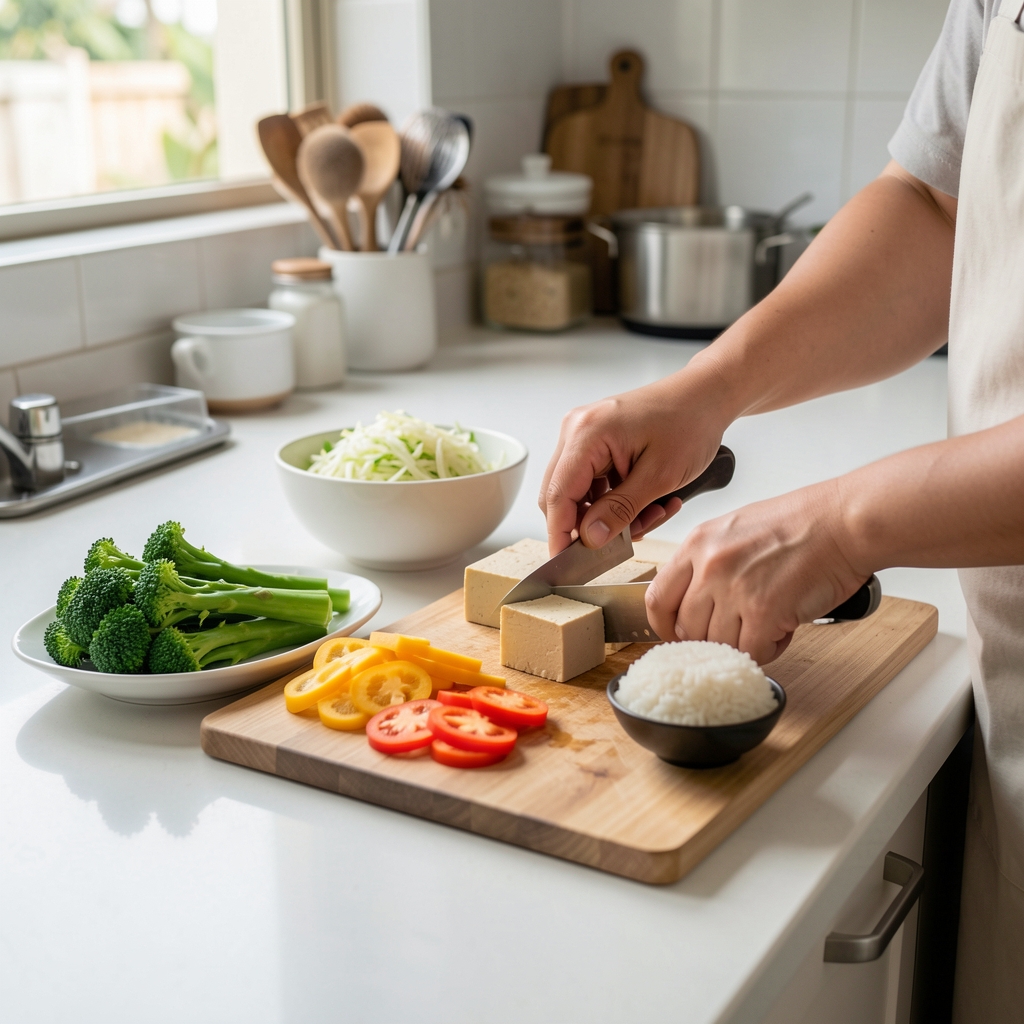
Meal planning without rigidity
A useful plan leaves room for weather, work and appetite. Think in components rather than rules: a nourishing staple, a source of protein, colour and a flavour you enjoy.
Planning does not mean cooking elaborate food every day. It can mean checking what is already in the kitchen, choosing two flexible meals and keeping one simple option available for a late return. Familiar ingredients, shared cooking and leftovers can reduce decision pressure without removing pleasure.
A simple planning table
| Moment | Preparation idea | Flexible alternative |
|---|---|---|
| Morning | Fruit with eggs or yoghurt | Leftover rice and vegetables |
| Midday | Rice, vegetables and fish | Soup with tofu and greens |
| Evening | Balanced shared meal | Simple plate assembled at home |
| Busy day | Prepared components in separate containers | Local meal selected with attention to variety |

The planning sequence
- Look at the next three days, including travel and late meetings.
- Choose a staple and two proteins that can appear in different meals.
- Wash or portion ingredients only as far as your time permits.
- Leave one unplanned meal for appetite, culture or a social invitation.
Kitchen questions
- What needs using first?
- Which ingredient can appear in two different dishes?
- Can leftovers be stored safely and labelled with a date?
- What is an easy option when the plan changes?
Food needs personal context
Allergies, kidney disease, diabetes, medication, digestive symptoms and cultural requirements can change what is appropriate. Discuss meaningful dietary changes with a registered professional who knows your history. Food safety also matters: refrigerate perishable leftovers promptly and follow local guidance.
“A plan is useful when it helps real meals happen, not when it creates another standard to fail.”
Keep variety realistic
Variety can come from changing vegetables, herbs, cooking methods and shared dishes over time. It does not require buying expensive or unfamiliar ingredients. A small rotation may make shopping clearer while leaving space for local availability and household preferences.
Review without judgement
At the end of a week, notice what was eaten, wasted, enjoyed and difficult to prepare. Use those observations to adjust the next plan. The purpose is a more workable relationship with meals, not a rigid score.