Community and belonging
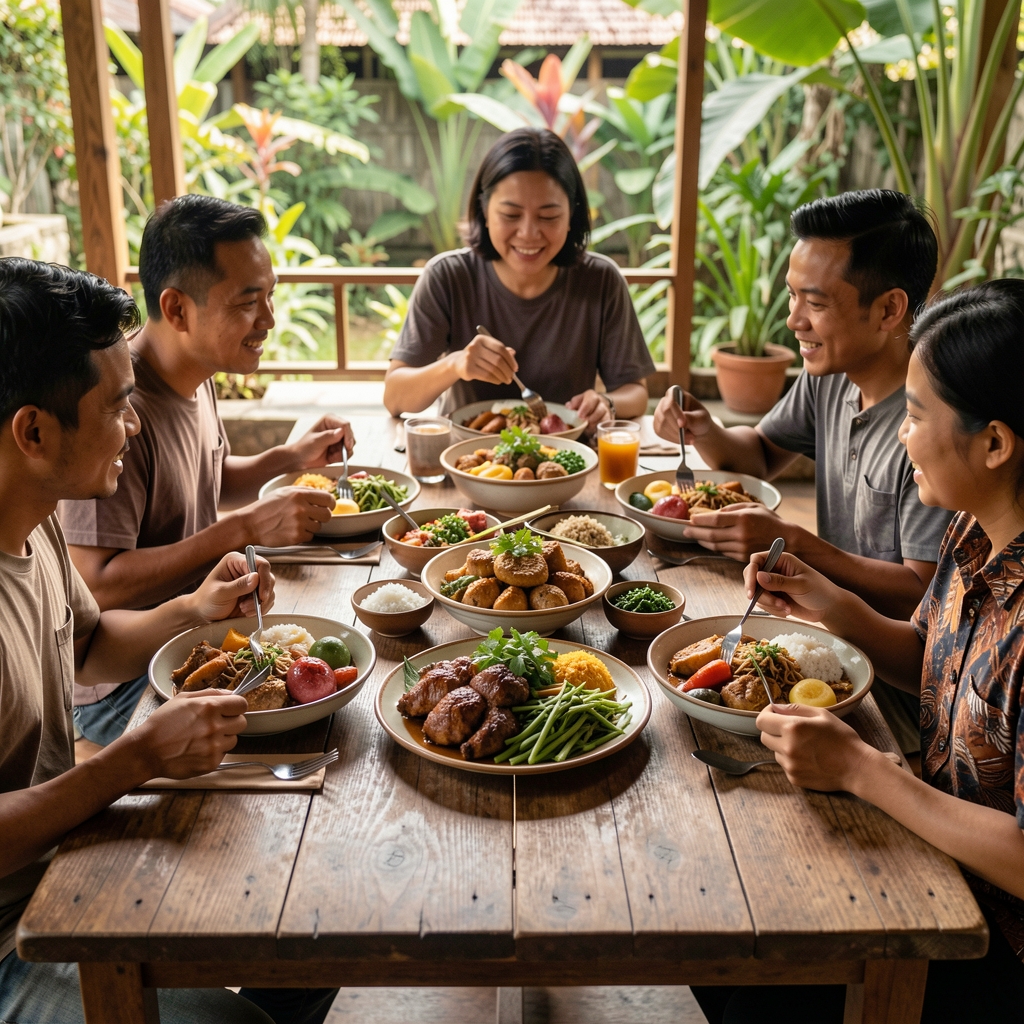
Shared routines make wellbeing more durable. A walk with a neighbour, a meal with family or a regular conversation can carry value that no solitary checklist can reproduce.
Belonging is built through repeated, ordinary contact rather than one dramatic event. In a city as varied as Jakarta, connection may happen in an apartment corridor, a mosque courtyard, a workplace, a family kitchen or a public park. Different people need different levels of conversation and privacy.
Share a local perspective
Make connection practical
- Put one recurring meeting on the calendar.
- Choose an activity that permits conversation.
- Offer help with a clear, manageable request.
- Respect privacy, difference and changing capacity.
Ways to participate
| Setting | Small invitation | Boundary to respect |
|---|---|---|
| Neighbourhood | Suggest a regular walk or market visit. | Accept a no without repeated pressure. |
| Family | Share a meal with phones put aside. | Do not turn the meal into an interrogation. |
| Workplace | Invite a short break or practical check-in. | Keep personal disclosure optional. |
| Community group | Offer a defined role for one event. | Make access, transport and timing clear. |
Connection has many forms
Editorial prompts
A reliable greeting can be a small anchor in a busy week. Participation does not require being the loudest person in the room. Support is easier to receive when the request is specific. These sentences are Kniton’s own editorial prompts, not quotations or testimonials from named individuals.
Care with consent
Community support should not replace professional care when someone is in danger, persistently distressed or unable to manage ordinary responsibilities. Ask what kind of help is welcome, protect private information and use local emergency services when there is immediate risk.
- Ask what would be useful instead of assuming.
- Offer one concrete action and a realistic time.
- Check whether the arrangement still suits both people.